A Weed, a Wild Green, and a Gardening Challenge
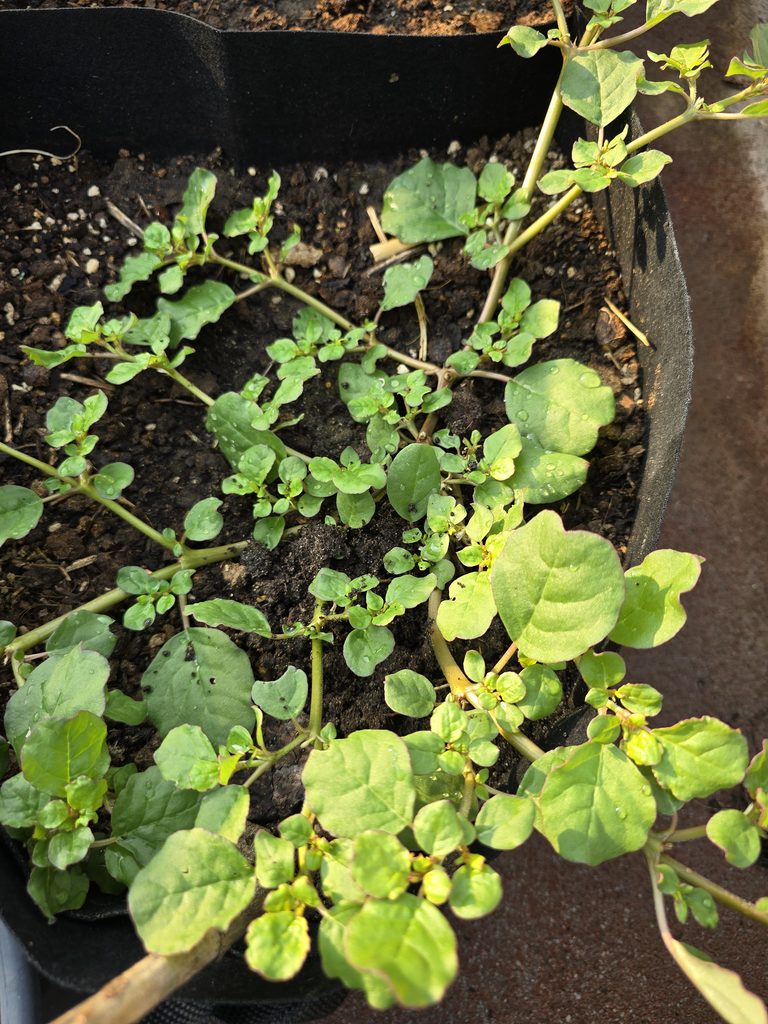
Last week, while clearing some of my containers, I came across a plant that looked very similar to common purslane, a wild green I often use in my cooking. But something caught my attention: its leaves were much broader than those of the purslane I was familiar with. It had also spread across the soil in no time, forming a green carpet. Seeing it in my garden has also made me notice it growing in a few other places around Qatar.
Curious, I started researching the plant to find out whether its leaves were edible. That was when I came across horse purslane a plant that can easily be mistaken for other purslane-like weeds. The more I read, the more I realised how important correct plant identification is, especially when we are considering using wild plants in the kitchen. Although horse purslane has been reported to have traditional food and fodder uses, there are also reports of potential adverse effects from consuming it. I would not assume it is safe to eat simply because it resembles common purslane.
This little discovery also got me thinking about how much there is to learn from the plants that appear in our gardens, even the ones we usually call weeds.
Getting to Know Horse Purslane
Horse purslane (Trianthema portulacastrum) belongs to the Aizoaceae family, commonly known as the fig-marigold family. It is a fleshy, much-branched annual plant that grows close to the ground, spreading its stems in different directions. This growth habit is described as prostrate. Originally native to southern Africa, horse purslane is now naturalised in India and many other warm regions. It thrives in hot weather and is commonly found in cultivated fields, vegetable gardens, roadsides, riverbeds and other disturbed areas. Its ability to spread rapidly makes it a particularly troublesome weed, especially during the rainy season.
It is known by several common names, including desert horse purslane, black pigweed and giant pigweed. The plant has small, fleshy, round to oval leaves that grow in opposite pairs. One leaf is often noticeably larger than the other. The stems may be green or reddish and can have fine hairs. Its tiny flowers, which may be white, pink or pinkish purple, usually open in the morning.
One reason horse purslane is difficult to manage is its ability to produce a large number of seeds. A single plant can reportedly produce tens of thousands of seeds, and these may remain viable in the soil for years. Allowing the plant to flower and set seed can therefore create problems in future growing seasons.
Horse purslane is sometimes confused with Punarnava (Boerhavia diffusa), also known as red hogweed. However, these are different species.
Common names in different languages
- English: Horse purslane
- Hindi: Sabuni
- Sanskrit: Chiratika, Dhanapatra,
- Tamil: Sharunnai, Shavalai
- Telugu: Ambatimadhu, Atikamamidi, Galijeru
- Kannada: Muchchugoni
- Malayalam: Sharunnau
- Madras regional name: Mukkarattai
Source: https://pmc.ncbi.nlm.nih.gov/articles/PMC3459455/#fn-group1
Can Horse Purslane Be Useful in the Garden?
As a home gardener, I look at weeds a little differently. In a small garden, I can keep an eye on what is growing, remove unwanted plants before they set seed, and consider whether correctly identified wild greens have any useful purpose.
However, horse purslane is a plant I would not allow to grow unchecked. It spreads quickly and competes with vegetables for water, nutrients, light and space. What interested me most with the articles was the possibility that it could also affect the growth of other plants.
Some studies have reported allelopathic effects in horse purslane. In simple terms, this means that certain compounds released by a plant may interfere with the germination or growth of neighbouring plants. Horse purslane has been reported to affect the germination and early growth of crops such as sorghum, pumpkin, eggplant, radish, pulses and wheat.
This made me think about my own experience. I had sown seeds in a container where horse purslane was growing, but they struggled to germinate. Could the weed have played a part? I cannot say for certain, as seed quality, moisture, temperature and other growing conditions can also affect germination. Still, the research made me curious about whether this plant was doing more than simply occupying space in my container.
Although horse purslane has been reported as an edible plant and used as fodder, some reports describe adverse effects from consuming its leaves, particularly older ones. The plant also contains oxalates, which can interfere with calcium availability. I wouldn’t rely on online articles alone to decide whether it is safe to eat. I would prefer to learn from someone with deep knowledge of wild plants and traditional food practices who can guide me on identifying and using them safely. There is still so much we can learn from traditional knowledge passed down through generations. Until I have better guidance, I haven’t used horse purslane in my cooking. Have you ever used horse purslane in your cooking? If you have, I would love to hear if you have used all parts of the plant? Please share your experience in the comments.
Why Is Horse Purslane a Problem in Agriculture?
In agricultural fields, horse purslane can become a serious weed because it competes with crops and can reduce yields. It has been reported in a wide range of crops, including mustard, maize, pigeon pea, mung bean, potato, onion, cotton, soybean, pearl millet and sugarcane. Infestations are particularly common during rainy seasons in many growing regions.
Managing horse purslane on a farm is a different challenge from managing it in a backyard. Hand-pulling may work in a small vegetable plot, but it is not practical across large areas where the weed can compete heavily with crops and replenish the soil seed bank. Integrated weed management is generally a more sustainable approach. Depending on the crop and local conditions, this can include timely mechanical weeding, crop rotation, mulching and cover crops, prevent the seed production.
Common Purslane vs Horse Purslane
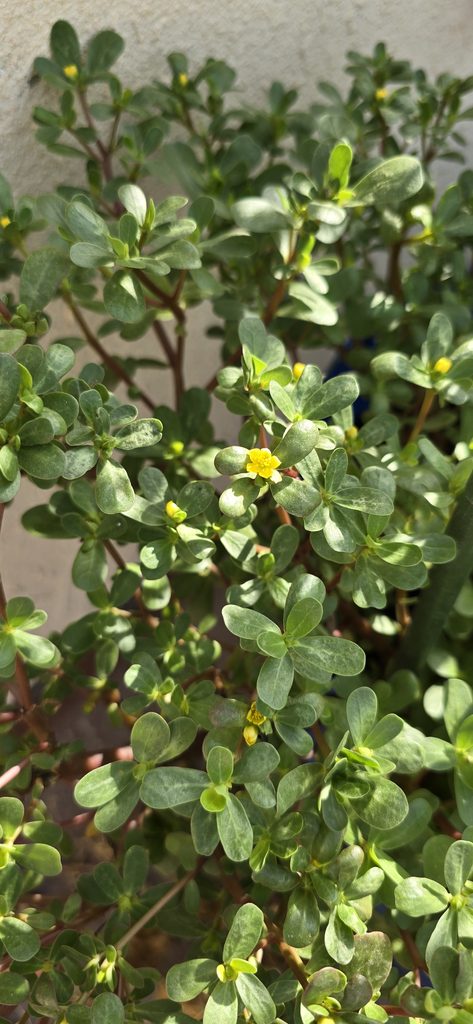
Although the two plants may look similar at first glance, several features can help distinguish them.
|
Feature |
Common purslane |
Horse purslane |
|
Scientific name |
Portulaca oleracea |
Trianthema portulacastrum |
|
Plant family |
Portulacaceae |
Aizoaceae |
|
Leaf arrangement |
Leaves alternate or appear clustered at the nodes |
Leaves grow in opposite pairs, often with one leaf larger than the other |
|
Leaves |
Fleshy, smooth and usually rounded or spoon-shaped |
Fleshy, round to oval and often broader, with unequal opposite leaves |
|
Stems |
Smooth, hairless, often reddish or purplish |
Green or reddish, sometimes with fine hairs |
|
Flowers |
Small, usually yellow |
Tiny, white, pink or pinkish-purple flowers |
|
Growth habit |
Spreading along the ground |
Spreading along the ground, often forming a dense mat |
|
Food use |
Widely eaten as a leafy vegetable in many regions |
Reported as edible in some contexts, but food safety should not be assumed |
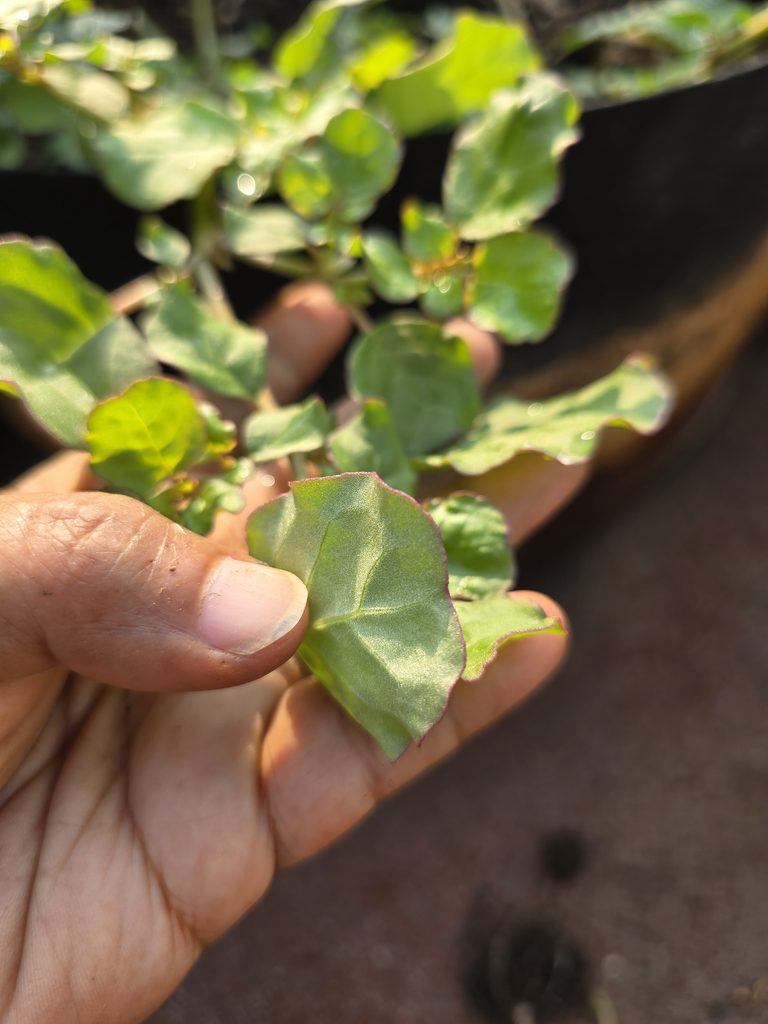
Horse purslane : purplish-red tinge along the edges of its leaves.
A Question for Fellow Gardeners
As an urban gardener, I can manage horse purslane by keeping a close eye on my containers and garden beds, removing it before it flowers and sets seed, and making the most of the space available for growing food. But what works in a small backyard may not be practical in a large agricultural field. How do you manage horse purslane where you live? If you have experience managing it on a larger scale, what methods have worked best for you?
Share your observations and suggestions in the comments. Learning from gardeners and farmers working in different climates and growing conditions can help us find more practical ways to manage this persistent weed. Especially those with farming experience, what methods would you suggest for managing horse purslane in large agricultural fields? I’d love to hear about practical, effective approaches you have tried or seen work. Please share your suggestions in the comments!
Leave a Reply